Keynote Speaker
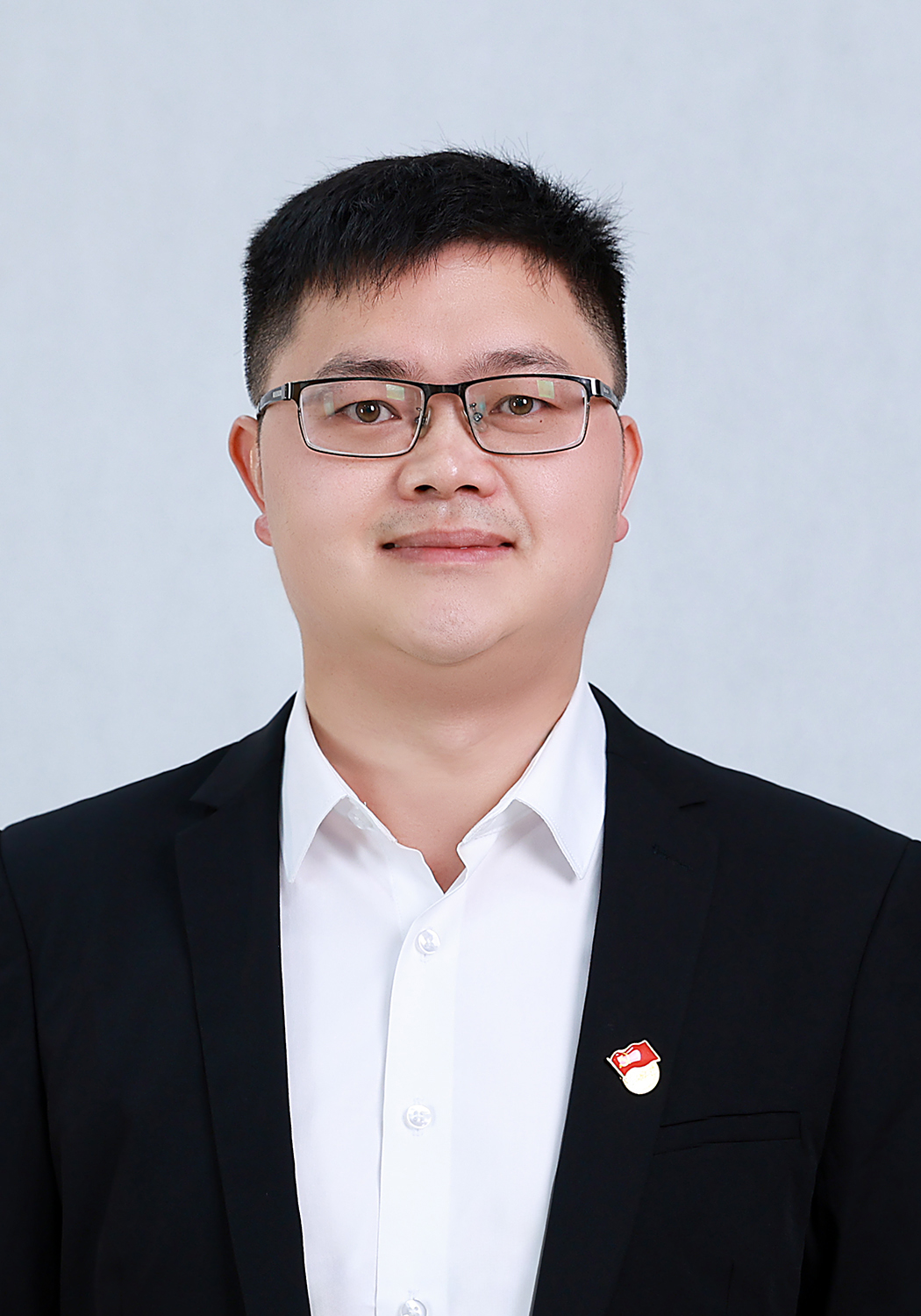
Prof. Zhongming Fang
Institute of Rice Industry Technology Research, Key Laboratory of Functional Agriculture of Guizhou Provincial Higher Education Institution, Guizhou Key Laboratory of High Quality, High Efficiency, and Yield Enhancement in Grain and Oil Crops, Key Laboratory of Plant Resource Conservation and Germplasm Innovation in Mountainous Region (Ministry of Education), College of Agricultural Sciences, Guizhou University, Guiyang 550025, ChinaSpeech Title: Precise Promoter Cis-Regulatory Element Editing Enables Coordinated Improvement of Plant Architecture, Yield and Grain Quality in Rice
Abstract: Cis-regulatory element (CRE) editing via CRISPR-Cas9 is a powerful precision breeding strategy for fine-tuning gene expression and optimizing complex agronomic traits, avoiding the extreme adverse phenotypes caused by traditional gene coding-region knockout in crop improvement. Rice plant height and tiller number are pivotal architectural traits that determine lodging resistance and grain yield, while synergistically improving plant architecture, yield and grain quality remains a major challenge in high-quality rice breeding. This study presents two efficient CRE editing strategies to precisely modulate key regulatory genes for the comprehensive improvement of rice agronomic performance. Firstly, targeting the gibberellin biosynthesis key gene SD1 in the aromatic rice variety Kam sweet rice, we performed targeted editing on the SD1 promoter cis-regulatory element. A specific adenine insertion enhanced the binding affinity of the transcription factor TCP19, thereby strengthening the endogenous TCP19–SD1 repression module and downregulating SD1 expression. The edited lines exhibited reduced gibberellin accumulation, shortened internode cell length and significantly decreased plant height, which effectively improved lodging resistance, while completely retaining original grain yield and nitrogen utilization efficiency without compromising grain quality. Secondly, focusing on the tillering regulatory gene D14 in Kam sweet rice, haplotype analysis of 533 rice accessions verified that the low-expression D14 haplotype is tightly associated with higher tiller number and grain yield. A targeted “CT” deletion at the -1011 bp promoter region was generated via CRISPR-Cas9 editing, which weakened the binding and transcriptional activation effects of OsGL6, OsBLR1 and OsP10 on D14, thus reducing D14 expression. The D14 promoter-edited lines displayed significantly enhanced tillering capacity and grain yield, accompanied by improved grain quality with increased gel consistency and reduced amylose content. Transcriptomic analysis confirmed that both CRE editing strategies remodeled the regulatory networks of phytohormone (gibberellin, auxin and strigolactone) signaling, and further integrated nitrogen metabolism pathways to precisely regulate rice growth and development. Collectively, this study demonstrates that precise promoter CRE editing can fine-tune endogenous gene expression without disrupting gene function, achieving the coordinated improvement of rice plant height, tiller number, yield and grain quality. Our findings highlight the great potential of CRE editing as a superior alternative to conventional gene knockout, providing a reliable and versatile precision breeding strategy for the molecular design and improvement of complex agronomic traits in modern rice and other cereal crops.
Biography: Zhongming Fang is a Professor of Molecular Genetics and Plant Breeding at the College of Agriculture, Guizhou University (GZU), China. His research focuses on the molecular genetic dissection of yield and quality traits in rice. He received his Ph.D. from the Graduate University of Chinese Academy of Sciences in 2012. Prof. Fang has led three projects funded by the National Natural Science Foundation of China (NSFC) and one sub-project under the National Key Research and Development Program, in addition to seven provincial and ministerial research grants. He has published over 30 papers as corresponding author in high-impact SCI journals, including Molecular Plant, Plant Biotechnology Journal, Journal of Integrative Plant Biology, Plant Physiology, and Theoretical and Applied Genetics. Among these, one paper has been recognized as a Hot Paper and two as Highly Cited Papers. He holds over 40 authorized invention patents as the first inventor and has co-bred two new rice varieties. In recognition of his scientific contributions, Prof. Fang has received the Second Prize of Natural Science Award of Guizhou Province (ranked first), the Third Prize of Natural Science Award of Hubei Province (ranked first), and the Guizhou Provincial Youth Science and Technology Award. He is currently a supervisor to 2 postdoctoral fellows, 6 Ph.D. students, and 9 M.S. students, and has successfully guided over 20 graduate students to completion. Prof. Fang serves as Deputy Director of the Guizhou Key Laboratory of High Quality, High Efficiency, and Yield Enhancement in Grain and Oil Crops, and a Position Scientist in the Guizhou Rice Industry Technology System. He is also an editorial board member of the Journal of Plant Genetic Resources and a council member of the Guizhou Society of Biochemistry and Molecular Biology. He has been honored as a “Golden Teacher” (Provincial Teaching Master), a distinguished expert under the Guizhou Provincial Party Committee, and a recipient of the Guizhou Thousand Talents Innovation and Entrepreneurship Program and the Guizhou Outstanding Young Scientific and Technological Talent Award.